Daily tech roundup: Nvidia’s leadership crisis, Ring’s self-flying drone, and Fairphone’s first US carrier
Today’s news is dominated by a leadership crisis at the company that powers most enterprise AI, plus a run of hardware stories where the device is supposed to run itself. Nvidia’s board is reportedly preparing to dismiss CEO Jensen Huang, Ring confirmed its indoor camera drone will have no manual controls after a crash on live television, Fairphone signed its first US carrier partner, and nine Korean deep-tech startups pitched for a spot at next year’s Disrupt. Here is what matters for your team.
At a glance
- Nvidia’s board is reportedly preparing to fire CEO Jensen Huang — The Verge, with TechCrunch on who might succeed him
- Ring’s camera drone will have no manual controls — The Verge
- Fairphone lands its first US carrier partner in Boost Mobile — WIRED
- Nine Korean startups vie for a Disrupt 2027 Battlefield 200 spot — TechCrunch
- WIRED’s best open earbuds for 2026 — WIRED
Nvidia’s board is reportedly preparing to dismiss Jensen Huang
What happened: Nvidia’s board is preparing to dismiss CEO Jensen Huang, The Verge reports, following a report from The New York Times about a second alleged extramarital affair — this one with an executive who reports to him, Nvidia’s vice president of health care, Kimberly Powell. The news comes just days after Huang admitted to a separate affair with a woman alleged to be a Chinese spy, according to The Wall Street Journal. The board was expected to meet as soon as today to decide Huang’s future. Nvidia did not immediately respond to a request for comment.
There is also no succession plan in place, TechCrunch reports. Its shortlist of possible successors includes AMD CEO Lisa Su, former Google CEO Eric Schmidt, Intel CEO Lip-Bu Tan, former Salesforce co-CEO Bret Taylor, Nvidia’s own Ian Buck — the vice president who helped develop CUDA, the software at the heart of Nvidia’s AI dominance — and CFO Colette Kress. Prediction market Kalshi put Huang’s odds of surviving the week at 30%.
Why it matters for teams: Nvidia is the backbone of enterprise AI infrastructure. A sudden leadership change at the top supplier of AI chips is a planning risk, not just a headline: procurement timelines, pricing, and product roadmaps can all wobble while a board picks a new chief executive. There is no reason to panic-buy GPUs, but if your AI capacity plans assume Nvidia’s current roadmap and pricing, now is a good time to re-check them.
What to watch: The board meeting’s outcome and any statement from Nvidia, plus whether Huang stays on in another role — TechCrunch notes the board could keep him as chairman, a role Nvidia does not currently have. Watch for any change in guidance or roadmap commitments in the days after.
Based on reporting by The Verge and TechCrunch.
Ring’s camera drone will have no manual controls — after crashing on live TV
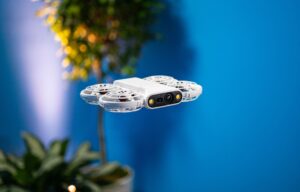
What happened: Ring has confirmed that its Ring Drone Cam, a security camera drone expected to reach homes in January, will have no manual controls. It relies entirely on an “AI Pilot” system to follow pre-programmed routes and navigate autonomously around obstacles. The confirmation follows an awkward demonstration on CBS Mornings, in which Ring founder Jamie Siminoff let technology reporter Jo Ling Kent manually fly an early version of the drone through a mobile app — and it crashed.
Why it matters for teams: An indoor flying camera with no manual override is a safety and policy question before it is a gadget question. If a device like this ever enters an office, warehouse, or facility, there is no human fallback when the autonomy gets it wrong — and the live-TV crash is a reminder that autonomy does get it wrong. Recording, flight paths, and where the drone can go unsupervised all need a policy before the hardware arrives, not after.
What to watch: Whether Ring changes course before the January launch, and how it explains the crash. For now, treat indoor camera drones as a procurement policy discussion, not a purchase.
Based on reporting by The Verge.
Fairphone lands its first US carrier partner in Boost Mobile
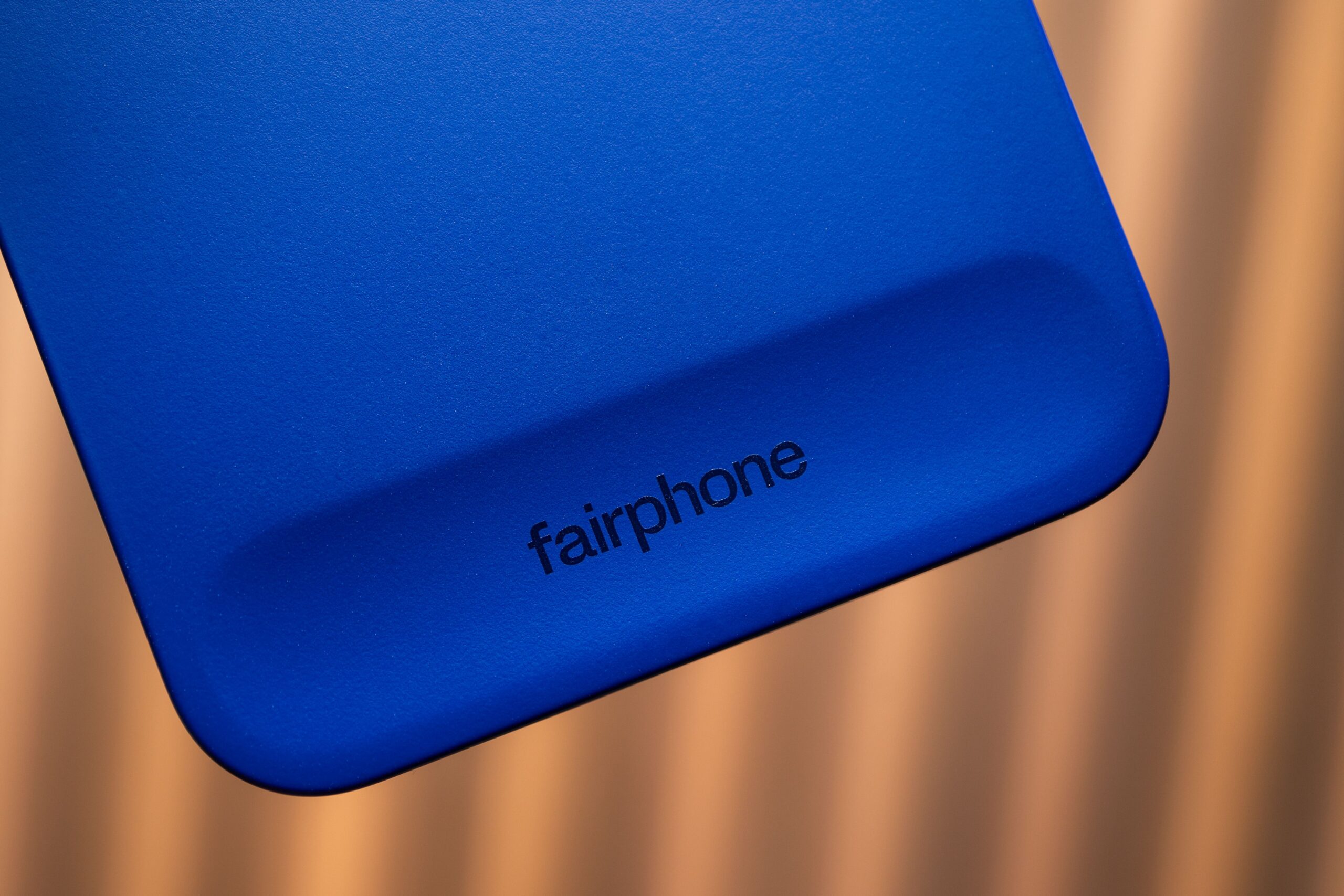
What happened: Fairphone, the maker of fully repairable smartphones, has landed its first US carrier partner in Boost Mobile, WIRED reports. The two are teaming up to sell wireless plans alongside Fairphone’s repairable phone — the company’s first carrier distribution deal in the United States.
Why it matters for teams: Repairable phones have been a niche in the US because they were sold unlocked, direct, with no carrier support. Carrier distribution changes the math: a phone you can fix with a screwdriver and cheap parts becomes a realistic fleet option, with longer service life and fewer replacements. Fairphone’s current US phone, the Gen 6+, launched in August at $649.99 with 12 user-replaceable parts — including the battery, display, and USB-C port — and software support through 2033, according to TechCrunch’s launch coverage.
What to watch: Plan pricing and bundling from Boost Mobile, and whether other carriers follow. If you refresh a device fleet, a repairable phone with a carrier plan attached is now worth putting on the shortlist.
Based on reporting by WIRED.
Nine Korean startups pitch for a Disrupt 2027 Battlefield 200 spot
What happened: Nine early-stage South Korean startups pitched this week at DETO 2026, a technology conference in Seoul, to earn a spot in next year’s Startup Battlefield 200 at TechCrunch Disrupt. The startups work across healthcare, fintech, energy, semiconductors, and AI, and all nine are looking to enter the US market. The winner was Voinosis, which builds AI that detects changes in brain health through voice analysis: a voice check takes less than five minutes, and the company claims 88% accuracy in screening for potential cognitive issues in a clinical study of 146 participants.
The other eight, in alphabetical order: Awesome Lab (ThermoFlux, a heating system using water electrolysis and ionization); Crosshub (IDBlock, identity verification and payments for travelers using self-sovereign identity and zero-knowledge proofs); DeepFusion AI (4D radar imaging for autonomous mobility, robotaxis, maritime surveillance, and defense); EFLOW (compact high-torque motors and actuators for robots, drones, and satellites); Otiton Medical (devices that measure body temperature and capture and analyze eardrum images); Riibotics (warehouse robots it says can be deployed within a day); Ternell (a new three-state T-SRAM memory designed to cut AI chips’ power use); and Testbank (Solve, an app that turns printed study materials into interactive digital versions).
Why it matters for teams: This is a watchlist, not a buying guide — but a few of these map directly onto team problems. Voice-based health screening could matter for healthcare and insurance teams; warehouse robotics that deploy in a day could matter for logistics; and lower-power AI memory could matter for anyone running AI inference at scale. The common thread is that all nine are explicitly targeting the US market, so partnerships and pilots are likely to follow.
What to watch: Which of the nine make the Battlefield 200 cut at Disrupt 2027, and whether Voinosis’s voice-screening claims hold up in larger studies.
Based on reporting by TechCrunch.
WIRED’s best open earbuds for 2026
What happened: WIRED published its 2026 picks for the best open earbuds, led by Shokz, Bose, and Soundcore, after testing dozens of models. Open earbuds sit outside the ear canal, so you hear the world and your music at the same time.
Why it matters for teams: In a hybrid office, that is a genuine feature, not a gimmick: you can stay aware of colleagues and surroundings while listening to calls or music, without the sealed-off feeling of noise-cancelling buds. If your team issues audio gear, open earbuds are worth considering alongside the usual sealed options.
Based on reporting by WIRED.
Bottom line
Nvidia’s leadership crisis is the story to watch today — the board’s decision will ripple through every team’s AI plans. Ring’s drone is a reminder that autonomous hardware still needs a human fallback, and Fairphone’s Boost Mobile deal makes repairable phones a realistic fleet option for the first time in the US. The Korean startup crop is worth a bookmark, not a budget line — yet.