
Wednesday, November 25, 2026
Today’s news is a reminder that governance and compliance are now core tech stories, not side notes. Nvidia’s chief executive is back in the job, but the export-control questions around his company have not gone away. In India, Flipkart is losing the CEO who ran it for nearly a decade, just as its IPO plans stay in limbo. And in the hardware world, AI coding tools are doing something nobody expected: forcing synth makers to open up their gear.
At a glance:
- Nvidia’s Jensen Huang is reinstated as CEO, but Congress, California, and reportedly the SEC still want answers about alleged chip smuggling by a customer (TechCrunch)
- Flipkart CEO Kalyan Krishnamurthy steps down next week, with the company’s IPO still on hold (TechCrunch)
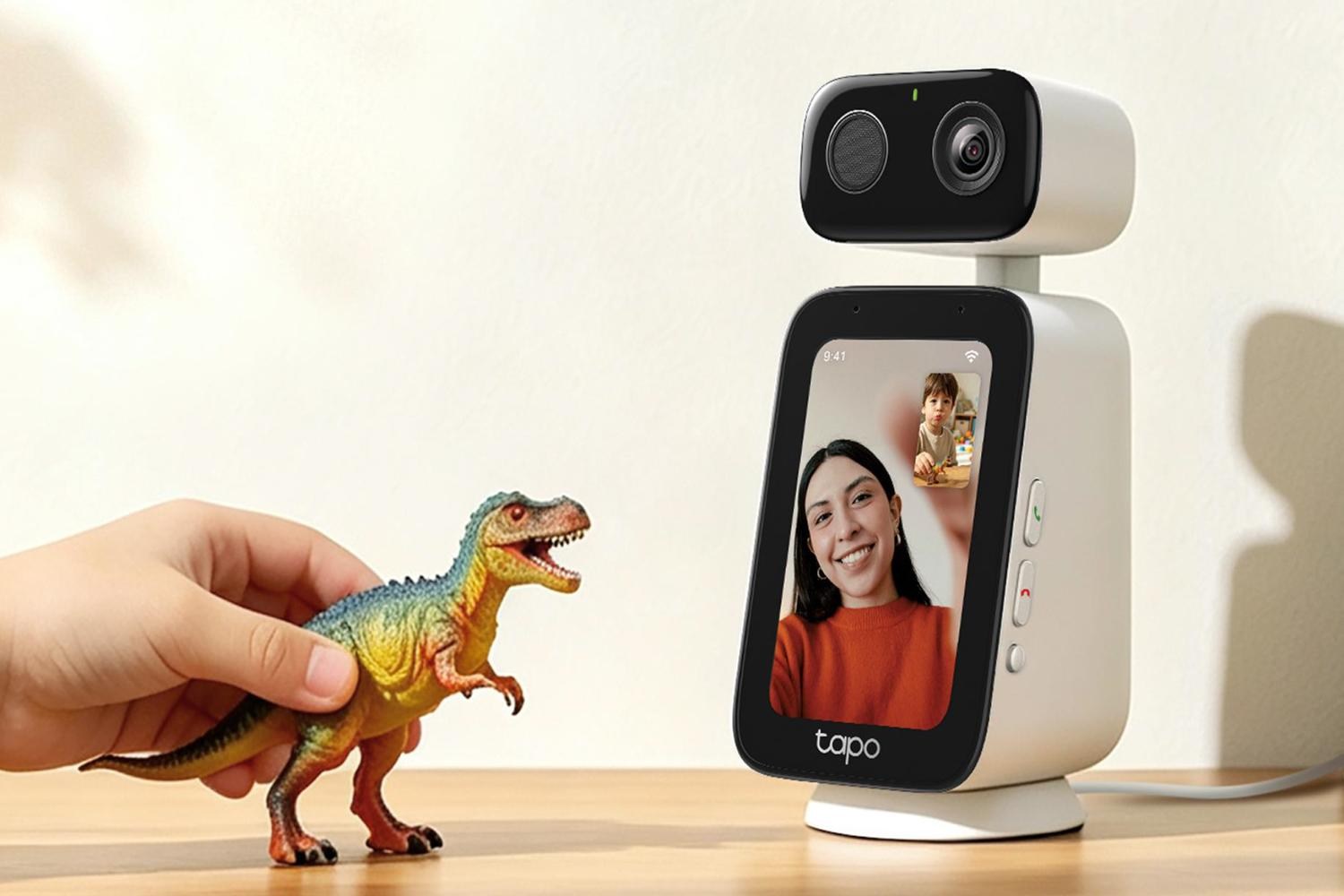
- TP-Link’s Tapo C825 is a 2K security camera with a touchscreen for hands-free video calls, on sale today for $149.99 (The Verge)
- Vibe-coding tools are pushing synth makers toward open source, and inMusic — owner of Akai, Moog, and Native Instruments — is leaning in (The Verge)
Nvidia’s Huang is back, but the Megaspeed questions are not going away
What happened: Jensen Huang has returned as Nvidia’s chief executive after the board said it received assurances from senior levels of the US government that his reinstatement posed no national security risk. President Donald Trump later said he called into the meeting to give that assurance. But the scrutiny has not eased. The US government opened an investigation in 2024 into Megaspeed, a Singapore-based data center operator and Nvidia customer, over allegations that advanced Nvidia GPUs bought for data center projects in Malaysia were diverted to China in violation of US export rules. Singapore began investigating similar allegations in 2025. Megaspeed has denied any wrongdoing.
On Monday, the US added Megaspeed and its affiliates to a list of companies restricted from US trade on national security grounds, and issued new rules barring large data centers that buy US chips from serving customers in China and other countries the US government considers problematic. Nvidia said it will stop selling licensed chips to China, hire its first compliance officer, and create a new board committee focused on export controls.
US Attorney General Todd Blanche said Tuesday that Nvidia is “a good corporate citizen” and suggested the company is not the target of an investigation, though he declined to answer questions about the Megaspeed inquiry, which the Justice Department said was ongoing as recently as last week. California’s attorney general and, reportedly, the Securities and Exchange Commission are also investigating. Three House committees plan to privately interview Huang and Nvidia’s top lawyer, Tim Teter, next week, and the Senate Banking Committee will question Huang in a public hearing on December 3.
Why it matters for teams: Export controls are no longer a niche legal topic — they now shape what hardware your organization can buy, where it can be deployed, and what your suppliers must prove about end users. The central question investigators are asking is what Nvidia knew about where its chips ended up, and whether Huang’s relationship with a Megaspeed executive gave the company reason to doubt that customer’s assurances. For any team buying AI infrastructure, the lesson is that supplier due diligence and end-use documentation are becoming as important as price and performance.
What to watch: The House interviews next week and the December 3 Senate hearing. Also watch whether other chipmakers face similar questions, and whether the new data-center rules change how cloud providers structure their customer screening.
Based on reporting by TechCrunch
Flipkart’s CEO steps down with the IPO still in limbo
What happened: Kalyan Krishnamurthy, who has led Flipkart for more than 11 years and steered it through Walmart’s $16 billion acquisition of a controlling stake in 2018, is stepping down as chief executive next week. His last day will be December 4, according to a Walmart spokesperson. Flipkart said it will announce his successor in the coming weeks. In the meantime, chief product and technology officer Balaji Thiagarajan will lead the company alongside its board. Thiagarajan joined Flipkart last year after founding an AI startup for corporate finance and holding senior engineering roles at Google, Microsoft, and Uber.
Under Krishnamurthy, Flipkart said its business grew more than five-fold. The company now has more than 500 million registered users and over 1.4 million sellers, with more than 150 million products across over 80 categories. It has recently expanded into quick commerce through Flipkart Minutes and food delivery through a venture called Eat-in by Minutes.
The exit comes amid uncertainty about Flipkart’s IPO. The company moved its headquarters from Singapore to India in March as part of its preparations to go public, but in May, Walmart reportedly told Flipkart to delay the IPO and focus on becoming profitable first. Walmart declined to comment on what prompted Krishnamurthy’s departure or whether the leadership change would affect IPO plans.
Why it matters for teams: Flipkart is India’s largest online retailer by gross merchandise value, ahead of Amazon, so a leadership change at the top of a company that size ripples through e-commerce, logistics, and payments partnerships across the region. The interim leader is a product and technology chief, which signals that Flipkart’s next chapter will be judged on product execution — including its quick-commerce and food-delivery bets — as much as on the IPO timeline.
What to watch: Who Flipkart names as permanent CEO, and whether the company gives any new signal on IPO timing. If you sell into India or rely on Flipkart’s marketplace, watch for changes in seller terms or category strategy under the new leadership.
Based on reporting by TechCrunch
Tapo’s new camera is a security camera and a video phone in one
What happened: TP-Link’s Tapo brand has launched the C825, an indoor security camera that adds a 4-inch touchscreen so it can also make hands-free video calls. The 2K pan-and-tilt camera can rotate 360 degrees and tilt up to 156 degrees, with motion tracking, AI-powered person and pet detection, and two-way audio with AI-enhanced noise filtering. It costs $149.99 and is available starting today. Once set up in the Tapo app, people at home can make or answer calls with a tap on the screen or a quick-call button, with no smartphone, app, or password needed day to day. It is a plug-in camera that needs continuous power.
Why it matters for teams: The interesting part is not the camera — it is the screen. A device that lets someone join a video call without a phone, an app, or a password is genuinely useful for hybrid and remote work: checking in on a parent, a quick face-to-face with a colleague working from home, or a shared space that needs a simple, always-on video link. For IT teams, it is also a reminder that the line between “security camera” and “communications device” is blurring, and that means thinking about where the video goes, who can call in, and how the device is managed — not just where it is mounted.
What to watch: Whether this category catches on, and how Tapo handles call privacy and recording. If you are evaluating it for an office or a home workspace, check the subscription and storage terms before you buy — prices and features may change.
Based on reporting by The Verge
Vibe coding is forcing synth makers to open up — and one big owner is joining in
What happened: AI coding assistants — “vibe coding” tools — and utilities like Reverse Engineer Anything have made it dramatically easier to reverse-engineer music hardware and write custom firmware for it. In the last several weeks, hobbyists have published replacement firmware and mods for gear from Elektron, Roland, Akai, Arturia, Ableton, and AlphaTheta, among others. A community directory launched on GitHub on October 11 cataloged roughly 260 firmware projects across 19 brands within 48 hours, and an audit found that 18 of 23 active mod repositories were created on or after September 12, 2026.
Manufacturers are now being forced to choose: fight the modders or join them. Roland has stayed publicly silent so far. But inMusic — the parent company of Akai, Moog, Native Instruments, and more — has chosen to embrace the trend. CEO Jack O’Donnell told The Verge the company will give the community a “toolbox” including open-source code for devices like the teased MPC Sample Key, a software development kit to make modifications safer, and a reset button so a bad mod can be undone. Akai has already started seeding pre-release hardware to outside developers, and demos show the Sample Key running third-party synths, Native Instruments’ Massive, and even a fully custom community-built operating system.
Why it matters for teams: This is the clearest example yet of AI coding tools changing a market, not just a workflow. Work that once took a specialist months of firmware disassembly now takes a laptop and patience, and the result is that a closed product can become an open platform whether the manufacturer likes it or not. The same dynamic applies well beyond music gear: any team that ships embedded software, firmware, or a closed device should assume that AI-assisted reverse engineering will reach it, and plan its IP, warranty, and support policies accordingly. The inMusic approach — publish the code, provide an SDK, and make recovery easy — is a playbook worth studying.
What to watch: Whether Roland and other holdouts follow inMusic’s lead, and how the modding community handles safety: a bad firmware flash can brick a device, so the SDK and reset button matter as much as the open code. If your team builds hardware, this is a good week to review what your warranty says about modified firmware.
Based on reporting by The Verge
Bottom line
Two of today’s stories are about accountability catching up with scale: Nvidia’s export-control questions and Flipkart’s leadership change both show that growth brings scrutiny, and that scrutiny now lands in public. The other two are about AI tools quietly redrawing product boundaries — a security camera that is also a phone, and closed music hardware that is becoming open whether its makers planned it or not. If you buy AI infrastructure, sell in India, manage hybrid workspaces, or ship embedded software, at least one of these is worth a closer look this week.