
Today’s news is about AI moving from demos into the physical world — and into the apps teams already run. A young startup is putting $1 million behind five unsolved materials science problems that could shape future chips. The first pure-play humanoid robot company is listing on the Nasdaq. Discord is rebuilding its desktop app to stop eating your RAM. And a UK-backed startup is betting AI can find new drugs without the lab work. Plus, Motorola is asking $1,600 for a phone that does not fold.
At a glance
- AI takes on materials science — Discovered Materials offers a $1 million prize pool for solutions to five open problems in chip materials (TechCrunch).
- First humanoid robot IPO — Agility lists on the Nasdaq via a reverse merger, raising $465 million, with real robots already working in warehouses (TechCrunch).
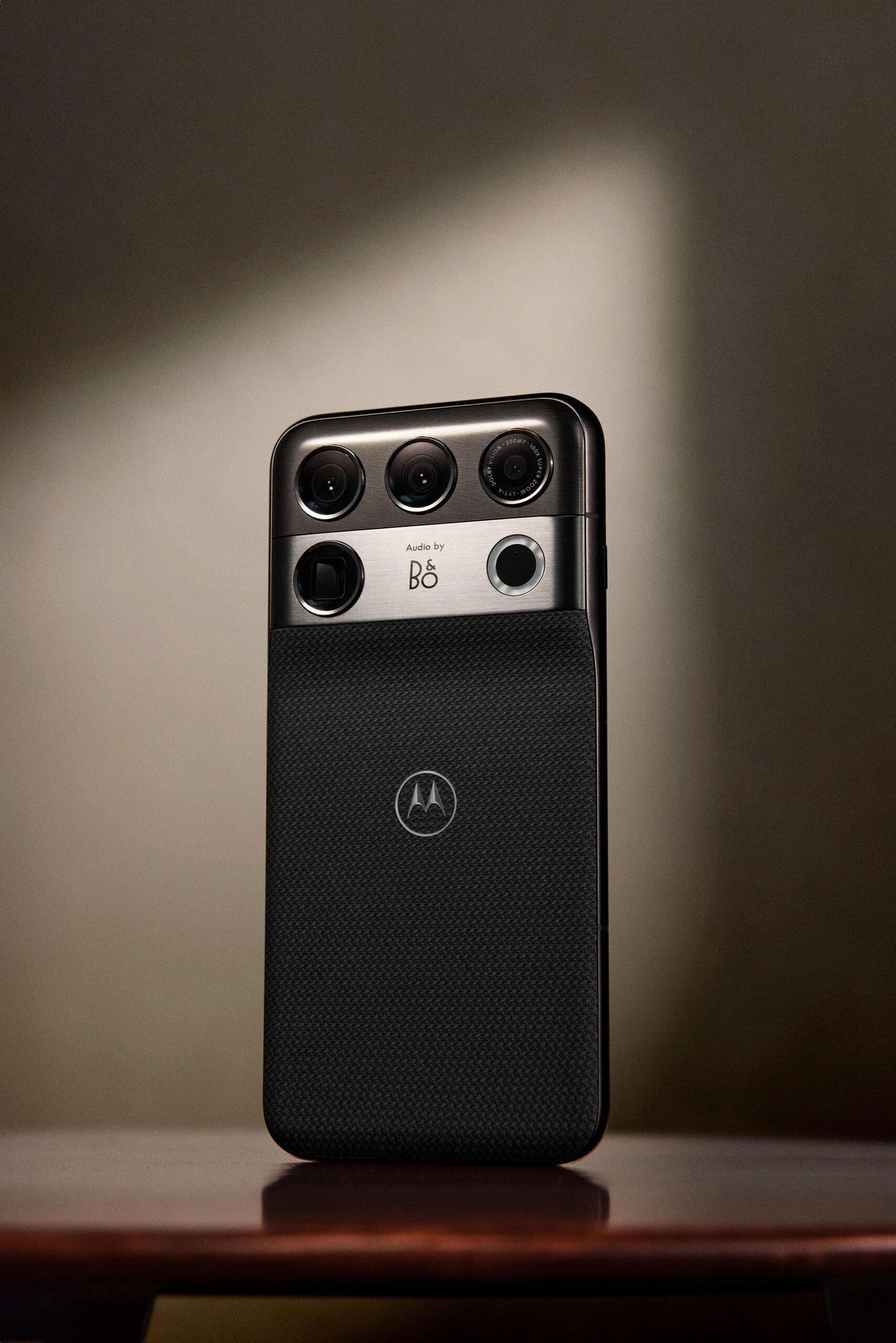
- Motorola’s $1,600 flagship — the Signature 27 pairs a ceramic and aluminum build with the brightest display Motorola has shipped and a next-generation Qualcomm processor (WIRED).
- AI drug discovery, minus the lab — Potential Sciences trains AI on computer-generated biochemical data to speed up finding new drugs (WIRED).
- Discord ditches Electron — the chat app is rebuilding its desktop client in Rust, with an early build using 290MB of RAM against 1GB or more today (The Verge).
A YC startup puts $1M behind five unsolved materials science problems
What happened: Discovered Materials, a months-old San Francisco startup from Y Combinator’s spring 2026 batch that uses AI models to find new materials for advanced chips, has announced a $1 million prize pool for solutions to five open problems in materials science. The problems, drawn up with an advisory group of academics at leading global universities, are: a theory to explain cuprate superconductivity; a numerical method to predict the structures of interfaces between silicon and silicon dioxide, a combination found in almost all semiconductors; a numerical method to map grain structure to thermal properties, for better heat dissipation materials; a theory to predict why shining light on materials can change their behaviour, particularly around superconductivity; and a numerical method to improve Density Functional Theory, a key technique for modelling the structures of atoms and molecules. Before announcing the challenge, the company let frontier lab models work on the problems autonomously for days, with internet access, and the models made little headway.
Why it matters for teams: Chip materials are the bottleneck under the whole AI buildout — better materials mean faster chips, better cooling, and cheaper energy use in the data centres teams depend on. The challenge doubles as a benchmark: tracking whether AI models can solve these problems will show whether models are actually making progress in hard physics, not just in maths and language. As co-founder Advaith Sridhar put it, the questions matter as much as the answers: materials science has no equivalent of the Millennium Prize Problems, so defining the right problems is itself the hard part.
What to watch / do next: Watch whether a frontier lab takes a run at the prizes with far more compute or a newer model — a solution to any one of these five would be a genuine scientific event with hardware consequences. For teams planning AI infrastructure, the longer signal is that the materials underneath the chips are still a constraint, and the companies trying to remove it are now months old, not decades. Discovered Materials says it partners with chip giants on research and now expects to produce an industrially useful material in under a year.
Based on reporting by TechCrunch.
Agility becomes the first pure humanoid robot company on the stock market
What happened: Agility arrives on the Nasdaq today as the first publicly traded pure-play humanoid robotics company, going public through a reverse merger with a special purpose acquisition company (SPAC) that raises $465 million in new capital from retail investors and a tranche of private funding. The company, spun out of Oregon State University in 2015, has taken a deliberately unglamorous route: its Digit robots do repetitive manual work in industrial settings for nine customers, including Schaeffler, GXO, Toyota Motor Manufacturing Canada, and Mercado Libre, moving heavy totes — more than 100,000 of them at a GXO logistics facility. The numbers are still early: Agility earned just $174,000 in the first six months of 2026, mostly from related parties, and lost $362 million in the same period. But it says it has $300 million in planned contracts from 30 customers for its next-generation robot, Digit 5, which can operate safely around humans rather than in an isolated work cell. Digit 5 prototypes are due to be demonstrated at CES 2027 and widely available by the end of that year.
Why it matters for teams: Humanoid robots are moving from trade-show demos to real deployments, and Agility is the first to test that story on public markets. For operations, logistics, and manufacturing teams, the pitch is concrete: the company says a robot can save $100,000 a year under a robot-as-a-service model, doing the repetitive heavy lifting — a 50-pound object, over and over — that workplaces try to keep humans away from. The catch is the cost of finding out: customers pay $500,000 for an on-site proof of concept before a deployment scales, and the robots still cannot do complex manipulation tasks. With 65,000 hours of real operational data from customer facilities, Agility has something most rivals do not: evidence from the field rather than the lab.
What to watch / do next: The two questions that decide whether this works are how fast Agility signs new Digit 5 customers, and whether the robot hits its undisclosed targets for throughput, uptime, and placement accuracy — it currently places loads with 98% accuracy. If your team runs a warehouse or plant, treat humanoid robotics as a 2027 planning question, not a 2026 purchase: watch the CES 2027 demos and the first Digit 5 deployments before budgeting for a proof of concept.
Based on reporting by TechCrunch.
Motorola’s $1,600 Signature 27 bets on premium without the fold
What happened: Motorola has unveiled the Signature 27, a $1,600 flagship phone built from ceramic and aluminum, with what WIRED describes as the brightest display Motorola has shipped, an “Event-Based Vision Sensor,” and a next-generation Qualcomm processor. It is a premium phone that does not fold — a deliberate bet that buyers will pay top-tier money for materials, display, and camera hardware rather than a folding screen.
Why it matters for teams: For IT teams managing mobile fleets, the interesting question is whether a $1,600 non-folding Android flagship earns a place alongside the usual Samsung and Apple choices, especially where durability and display quality matter more than novelty. A new premium tier from a third manufacturer also keeps pressure on the two incumbents’ pricing and trade-in terms.
What to watch / do next: If your fleet refresh is coming up, wait for independent battery and durability testing before adding a $1,600 device to the approved list — launch claims about the brightest display and a new sensor are worth verifying in real use. Prices and specifications are as reported and may change.
Based on reporting by WIRED.
This AI startup wants to find new drugs without the lab work
What happened: Potential Sciences, a startup backed by the UK government, is betting that training AI models on computer-generated biochemical data can speed up the slow, laborious process of developing new drugs — skipping much of the lab work that traditionally comes first.
Why it matters for teams: Drug discovery is one of the clearest tests of whether AI trained on synthetic data can do real science. If models trained on simulated biochemistry can shortlist drug candidates reliably, the same approach — synthetic data standing in for scarce, expensive real-world data — applies well beyond pharma, from materials to manufacturing. For life sciences and health-tech teams, it is also a procurement signal: AI drug-discovery vendors are multiplying, and the ones with government backing and a distinct data strategy are the ones to track.
What to watch / do next: Treat this as a technique to watch, not a product to buy: the proof will be in validated candidates, not in training claims. If your team evaluates AI vendors in science or research, ask how their models are validated against real-world outcomes — synthetic data is only as good as the physics behind it.
Based on reporting by WIRED.
Discord is ditching Electron — and the new app uses far less RAM
What happened: Discord is moving its apps fully to Rust, abandoning Electron for its desktop app — and React Native is going too. Mobile will keep a native interface but share app code with desktop through Rust. Discord has used Rust in its infrastructure and voice technology since 2018, but getting the whole client there was, in CTO Stanislav Vishnevskiy’s words, “the holy grail.” The early evidence is striking: Vishnevskiy shared an image of the new Windows client using just 290MB of RAM, against a current app that can easily pass 1GB with only a few servers joined. There is no firm date yet — Discord hopes to get the new client into testing with users soon.
Why it matters for teams: Discord is a daily tool for many dev, community, and ops teams, and its Electron appetite is a long-standing complaint on machines already loaded with browsers, IDEs, and monitoring tools. A native Rust client that uses a fraction of the memory would free real resources on work laptops, and it is also a signal for anyone choosing a desktop framework: Electron’s convenience has a cost, and one of its biggest users just decided the cost was too high. The 290MB figure is a single example, not a formal benchmark, so the general gain is not yet quantified.
What to watch / do next: If Discord is part of your team’s stack, expect a lighter client in testing soon — and consider it a prompt to audit the other Electron apps on your machines, since the same memory savings may be available elsewhere. Watch for the testing rollout and for independent measurements of the new client’s real-world footprint before assuming the 70%-plus saving holds across everyday use.
Based on reporting by The Verge.
Bottom line
Today’s through-line is AI meeting the physical world: new chip materials, robots on warehouse floors, and drugs discovered in simulation. The practical moves are near-term ones — Discord’s lighter client is the change most teams will feel first, and Agility’s listing makes humanoid robotics a real 2027 planning question. Keep the rest on your watch list: a $1 million materials prize and a synthetic-data drug bet are both experiments whose results will take time, and neither is a purchase decision yet.