Nvidia dominated today’s tech news, and the message from its new interim chief was consistent across two fronts: the freewheeling era is over. Interim CEO Colette Kress used Tuesday’s earnings call to clarify that Nvidia’s loan guarantees for data-center customers only kick in once a project is actually built — and to announce that the company has stopped shipping its advanced AI chips to China altogether. Elsewhere, a seven-person startup raised $7.5 million to make enterprise documents usable by AI agents, and NASA’s Voyager 1 crossed a milestone no human-made object has ever reached.
At a glance:
- Nvidia clarifies its neocloud financing — loan guarantees only take effect once a customer has financing, a built facility, and Nvidia gear installed. (TechCrunch)
- Nvidia stops selling AI chips to China — no more licensed Hopper data-center products for China, with no reason given. (The Verge)
- Unsiloed AI raises $7.5M — a seed round to turn complex enterprise documents into structured data AI agents can use. (TechCrunch)
- Voyager 1 is one light-day away — after 49 years, the probe is 16.094 billion miles from Earth. (The Verge)
Nvidia clarifies when its data-center loan guarantees actually apply
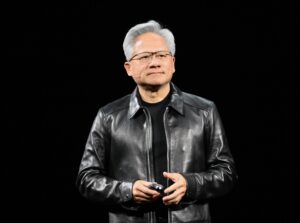
What happened: Interim CEO Colette Kress told analysts on Tuesday’s earnings call that Nvidia’s guarantees on data-center loans are conditional, not open-ended. A guarantee only takes effect once the customer has secured the financing to build the facility and install Nvidia’s products — if the project stalls or fails to meet those conditions, the guarantee “doesn’t exist,” Kress said. She pointed to the $105 billion backstop for OpenAI’s PORTS-Pike data-center campus in Ohio, announced in August, as an example of terms like these; in exchange for that guarantee, OpenAI promised the campus would use Nvidia equipment exclusively. Kress said this was a clarification of existing terms, not a policy change, though the terms had never been made public before. She also said Nvidia will be far more selective about which companies it helps finance in the future, while still treating access to land, power, and building shells as a top priority. The clarification follows the abrupt departure of former CEO Jensen Huang last week, who had aggressively invested in AI startups and neoclouds and begun guaranteeing large loans for new data centers. Reports said Kress had pushed back on the scale of that dealmaking, including reducing the OpenAI guarantee from $250 billion to $105 billion. Nvidia reported third-quarter net income of $64.9 billion, up from $59.7 billion the prior quarter.
Why it matters for teams: Nvidia’s financing has been quietly underwriting the AI infrastructure boom — if you buy cloud capacity or AI services, some of it sits on data centers Nvidia helped finance. Tighter, conditional guarantees mean fewer speculative builds get funded, which could slow the flood of new capacity but also reduce the risk of a glut of half-finished facilities. For teams planning AI infrastructure spending, the signal is that Nvidia is shifting from growth at any cost toward deals that are already viable on their own merits.
What to watch: Whether other neoclouds and AI builders can still raise financing on their own now that Nvidia’s backstop comes with strings attached — and whether the OpenAI campus in Ohio moves ahead on schedule under the clarified terms.
Based on reporting by TechCrunch.
Nvidia stops selling advanced AI chips to China
What happened: Nvidia has stopped sending its advanced AI chips to China, interim CEO Colette Kress announced on the same Tuesday earnings call. The chips at issue are Nvidia’s Hopper-architecture H200 processors. Kress said the company’s guidance “does not have any licensed Hopper data center products included, and we are no longer shipping licenced Hopper data center products to China.” She did not explain why Nvidia was ending the shipments, and did not say whether the company would pursue other business with China in the future. The move is a reversal: under former CEO Jensen Huang, Nvidia had fought for the right to ship H200 chips to China, and received White House approval to do so in December last year. Nvidia had already been having trouble moving the chips — Reuters reported earlier this month that around 600,000 H200 chips were stuck in Hong Kong after Beijing withheld approval for large-scale imports, as China works to reduce its dependence on US technology.
Why it matters for teams: The H200 cutoff is the latest turn in the US–China chip standoff, and it affects more than Nvidia’s revenue. If your supply chain, customers, or infrastructure plans touch China, expect continued uncertainty about which advanced hardware can actually be sold and delivered there. The 600,000 stranded chips are a reminder that approvals on paper don’t always translate into shipments on the ground.
What to watch: Whether Nvidia offers any further explanation, what happens to the chips already stockpiled in Hong Kong, and how China’s push for domestic alternatives progresses — that last trend will shape the competitive landscape for AI hardware well beyond this quarter.
Based on reporting by The Verge.
Unsiloed AI raises $7.5 million to make enterprise documents usable by AI agents
What happened: Unsiloed AI has raised $7.5 million in seed funding led by Felicis, with participation from Y Combinator, Orange Collective, and Uncorrelated Ventures, plus angel investors Aarthi Ramamurthy and Beth Turner. The San Francisco startup, a seven-person team, builds software that breaks down complex business documents — tables, charts, and complicated layouts — and turns them into structured data that AI agents can use. Crucially, the technology also shows where each extracted fact came from in the original document, so businesses can verify results rather than take the AI’s output at face value. Co-founder and CEO Aman Mishra told TechCrunch the startup uses “dual-stream” vision models that handle text and image data separately, plus a technique called “heat map-based chunking” to focus computing power on the most important parts of a document, such as figures and charts. The company says it hit 99.78% accuracy across roughly 84,000 extracted data points in a test on 542 financial documents from an enterprise customer — a result that has not been independently verified. Unsiloed also says it outperformed competing document-processing tools on olmOCR-Bench, a public benchmark from Allen AI, scoring 88.0 against 66.0 for Reducto’s agentic system and 39.9 for Unstructured across 1,403 PDF pages. Pricing starts at one cent per page. The startup already works with customers in finance, legal services, and healthcare, including a bank processing documents and a law firm running the software on its own servers for contracts and old case files. It plans to use the funding to hire researchers and engineers, expand sales, and build proprietary datasets.
Why it matters for teams: The bottleneck for AI agents in most enterprises isn’t the model — it’s the documents. Contracts, financial statements, and medical records are full of tables and layouts that trip up general-purpose AI, and a wrong extraction in a bank or a hospital can be costly. Unsiloed’s pitch — structured output with a traceable source for every fact — addresses the trust problem directly, which is what stops most teams from letting agents touch real documents. The crowded field, including Reducto, Unstructured, and offerings from Microsoft and Amazon, means buyers should demand head-to-head accuracy tests on their own documents rather than taking benchmark claims at face value.
What to do next: If your team is piloting AI agents on document-heavy work, run a small extraction test on your own files before committing — and check whether the tool can show its sources, since that traceability is what makes the output auditable. At one cent per page, a pilot is cheap; the real cost is a wrong answer nobody catches.
Based on reporting by TechCrunch.
NASA’s Voyager 1 is now one light-day from Earth
What happened: After 49 years in space, NASA’s Voyager 1 has crossed a milestone no human-made object has reached before: it is now officially one light-day away from Earth. The probe crossed the mark on Wednesday at 5:16 AM ET and is now 16.094 billion miles from our planet — the distance light travels in 24 hours. Voyager 1 completed its primary mission with flybys of Jupiter and Saturn in 1980 and has been heading toward a star called Gliese 445 in the Ursa Minor constellation ever since.
Why it matters for teams: It doesn’t, directly — no roadmap or budget changes because a 1977 spacecraft hit a distance marker. But Voyager 1 is a useful reminder of what long-lived engineering looks like: a system launched nearly half a century ago, still operating and still sending data home from farther away than anything else humans have built. When your team debates how long a system really needs to last, this is the extreme end of the answer.
What to watch: Nothing actionable — just a moment to appreciate that the probe is still going, and still talking to us across a full light-day of empty space.
Based on reporting by The Verge.
Bottom line
Today’s story is Nvidia’s reset: conditional financing, more selective dealmaking, and a hard stop on H200 shipments to China all point to a company tightening its grip after a leadership change. For teams, the practical effects are a potentially slower but steadier build-out of AI infrastructure, and more uncertainty in any supply chain touching China. The Unsiloed AI funding is the smaller story worth watching longer-term — if AI agents are going to do real enterprise work, they need to read real documents accurately, with receipts. And Voyager 1, one light-day out and still phoning home, is a good reminder that the best engineering outlasts every news cycle.