Daily tech roundup: Nvidia’s leadership crisis deepens, Zoox robotaxis join Uber, and energy startups raise big
Monday brings a follow-up to the biggest leadership story in tech, a milestone for driverless cars, and two very different bets on the energy transition. Nvidia’s former CEO remains at the center of a scandal that is now spilling into late-night TV and succession speculation, while Uber puts steering-wheel-free robotaxis on its app for the first time and two startups — one drilling for geothermal heat, one building batteries — pulled in major funding.
At a glance
- Nvidia’s scandal isn’t slowing down — the fallout from Jensen Huang’s resignation keeps growing, with late-night recaps and open questions about who runs the AI chip giant next. (The Verge, Mashable)
- Zoox robotaxis are now bookable on Uber — riders in Las Vegas can be matched with Amazon’s purpose-built driverless cars at no extra charge. (The Verge)
- Bedrock Energy raises $24 million — AI-guided geothermal drilling for enterprise buildings, with data centers now in the conversation. (TechCrunch)
- Battery startup Our Next Energy is going public — via SPAC, after pivoting from EVs to grid storage, defense, and rail. (TechCrunch)
Nvidia’s scandal isn’t slowing down
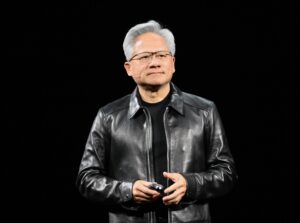
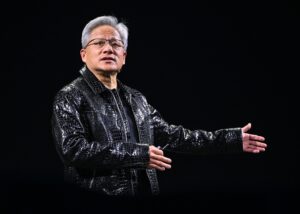
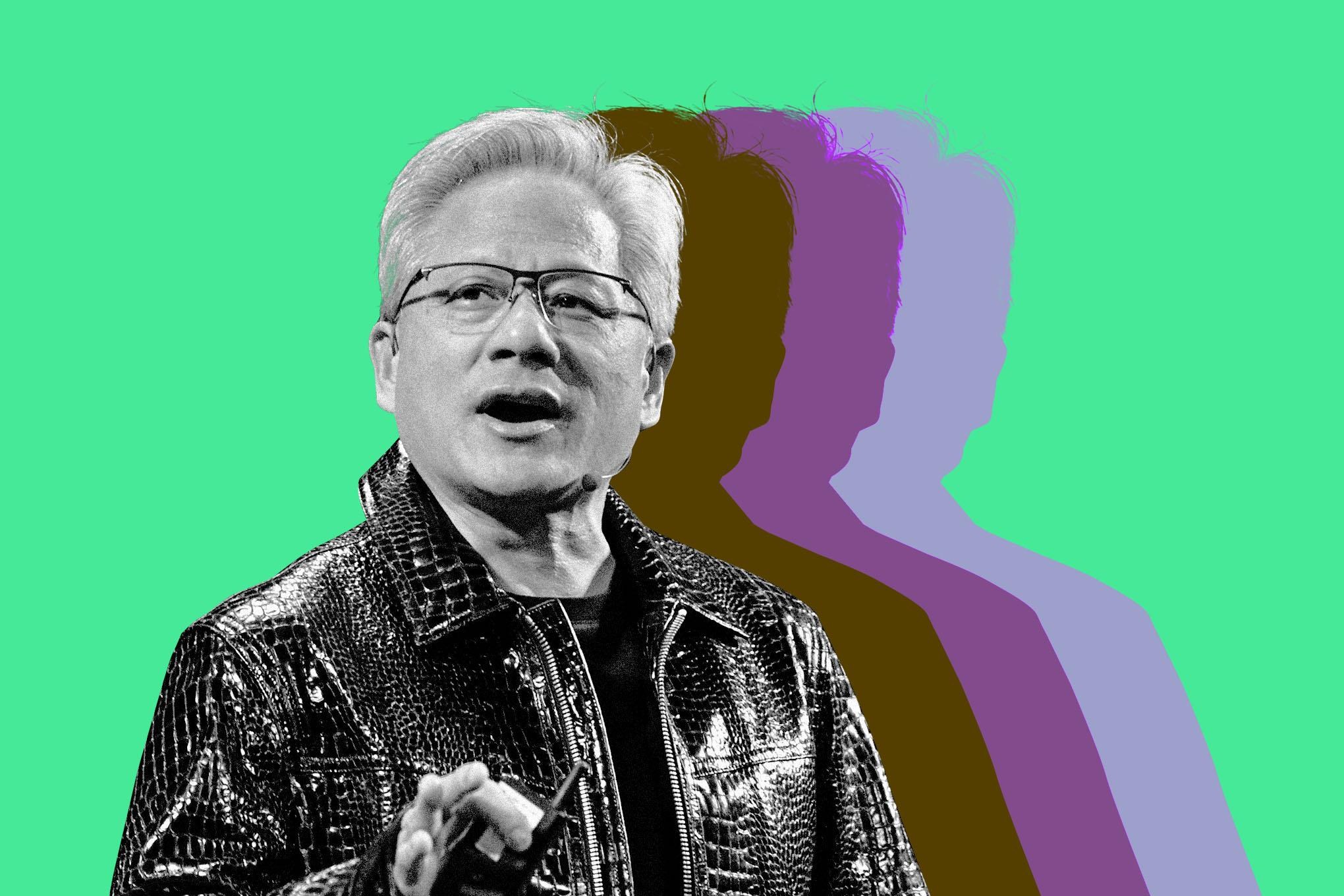
What happened: A week after Jensen Huang resigned as Nvidia’s CEO, the story keeps generating new developments. Huang stepped down after admitting to an affair with a woman described as an alleged Chinese spy, and news of two more affairs — one with an executive who reported to him and another Nvidia employee — has since come to light. The saga reached late-night television on Sunday, when John Oliver devoted a segment to it on Last Week Tonight, and President Donald Trump defended Huang at a White House briefing. The Verge notes the stakes: for years Huang held almost unprecedented power over the direction of AI, with Nvidia’s chips described as the bedrock on which advanced AI technology in the U.S. is being built, demand consistently outpacing supply, and an investment portfolio in AI companies worth nearly $100 billion.
Why it matters for teams: Nvidia’s chips sit underneath nearly every enterprise AI plan, from training budgets to cloud GPU availability. A leadership vacuum at the company that controls that supply chain is not a celebrity story — it is a procurement and planning risk. If succession drags on or strategy shifts, teams should expect the uncertainty to show up in chip allocation, pricing, and the roadmaps their vendors depend on.
What to watch: Who Nvidia names as Huang’s long-term successor, and whether the board moves quickly or lets an interim arrangement linger. Also watch whether major cloud and AI customers start hedging — diversifying chip suppliers or locking in longer-term supply — while the transition plays out.
Based on reporting by The Verge and Mashable.
Zoox robotaxis are now bookable on Uber
What happened: Starting today, Uber riders in Las Vegas can be matched with robotaxis from Zoox, Amazon’s self-driving unit. The vehicles are purpose-built and bidirectional, with no steering wheel at all. It is a first for both companies: the first time Uber has added a purpose-built, steering-wheel-free autonomous vehicle to its network, and the first time Zoox has opened its fleet to a third-party app. Riders ordering UberX, Uber Comfort, Uber Electric, Uber Comfort Electric, or Wait & Save can be matched with a Zoox at no extra charge.
Why it matters for teams: Robotaxis are moving from pilot projects to mainstream consumer apps, which changes the math for corporate travel, logistics, and last-mile delivery planning. Uber’s willingness to add a second robotaxi partner — even as its relationship with Waymo appears to be cooling — signals that autonomous fleets are becoming a competitive marketplace rather than a single-vendor bet.
What to watch: How quickly Uber expands Zoox beyond Las Vegas (Los Angeles is named in the rollout), whether rider uptake matches the hype, and how the economics compare once the novelty wears off. For teams managing travel or fleet budgets, the near-term signal is simple: driverless rides are now a bookable option, not a demo.
Based on reporting by The Verge.
Bedrock Energy raises $24 million to drill smarter for geothermal heat
What happened: Bedrock Energy raised a $24 million funding round, led by Clean Energy Ventures and Clearvision Ventures, to expand its fleet of AI-guided geothermal drill rigs. The company says its rigs, which borrow directional-drilling techniques from the oil and gas industry and are guided by its own subsurface models, can cut drilling times by up to 80% — the biggest cost barrier for geothermal heat pumps. Bedrock has focused on commercial properties so far and currently operates in Utah, Colorado, New York, Alberta, and Texas, with expansion planned into New England, New Jersey, the upper Midwest, and more western states. It has drilled boreholes at nine sites and has secured payments from new customers expecting drilling in the next year or two.
Why it matters for teams: Geothermal heat pumps use the ground as a heat source in winter and a heat sink in summer, and once installed they need far less maintenance than traditional HVAC. The more interesting angle for IT teams: Bedrock says it is talking with data center developers, some about cooling server racks and others about the technology’s flat load profile — deploying geothermal on neighboring properties can free up significant grid capacity. One Michigan prospect told the company that freeing a few megawatts could let a data center operate months or even a year earlier, and a year of revenue for a data center is very meaningful.
What to watch: Whether geothermal moves from a niche efficiency play to a standard part of data center and large-building planning, especially in power-constrained markets. If you are scoping a new facility or a major HVAC refresh, ask whether a geothermal assessment is on the table — the drilling cost, long the deal-breaker, is the exact problem Bedrock is trying to solve.
Based on reporting by TechCrunch.
Battery startup Our Next Energy is going public — after nearly dying
What happened: Our Next Energy (ONE), a Michigan battery startup that survived a near-collapse, is going public through a SPAC merger with Wen Acquisition Corp. The company says it is valued at $600 million pre-money and expects the merger to bring $400 million in gross proceeds, assuming no redemptions. The combined company will trade on the Nasdaq under the ticker “ONEE,” with a pro forma implied equity value of $1 billion. ONE has raised $483 million to date, according to PitchBook, and was once valued at $1.3 billion. Its founder, former Ford and Apple engineer Mujeeb Ijaz, was ousted as CEO in December 2023 and returned in March 2025 after a new funding round closed.
Why it matters for teams: ONE’s story is a case study in how fast the energy market is shifting under AI. The company started in EV batteries, then pivoted to grid-scale storage when automakers balked at prices — and grid demand took off as AI data centers strained the power supply. It has since added defense and rail: a hybrid locomotive using a 2.8 megawatt-hour battery, with customers reportedly seeing a 50% improvement in diesel fuel consumption. The company expects $30 million in revenue this year, hopes to double that next year, and says it holds $200 million in binding, multi-year contracts with railroads and defense contractors. Its pitch leans on U.S. government restrictions on buying batteries made in China or using China-controlled minerals — a market where an American supplier can charge a premium.
What to watch: Whether the public listing gives ONE the capital to survive in a brutally competitive battery market, and whether the defense and rail bets hold up as durable revenue rather than a detour. For teams planning energy storage or backup power, the broader signal is that grid-scale batteries are now a mainstream infrastructure play — and that domestic supply chains are becoming a selling point, not just a compliance checkbox.
Based on reporting by TechCrunch.
Bottom line
The through-line today is uncertainty at the top of the AI stack and momentum at the edges. Nvidia’s leadership question is unresolved and directly affects every team’s AI supply chain — watch the succession, not the late-night jokes. Meanwhile, robotaxis and geothermal drilling are both quietly becoming practical options rather than futuristic demos. If you run infrastructure, facilities, or travel budgets, the Zoox launch and Bedrock’s raise are worth a closer look this week; if you plan AI spending, keep a close eye on Nvidia’s next move.