Today’s news is a reminder that even the biggest names in AI are not immune to governance, regulation, and real-world physics. Nvidia faces a possible credit downgrade over how the company is run, SpaceX won approval to put AI data centers in orbit, and Waymo’s robotaxis hit a wall on California freeways. Plus: X finally adds parental controls, and WIRED’s tested picks for the home-office chair upgrade.
At a glance
- S&P weighs a Nvidia credit downgrade over governance and “key man” risk — TechCrunch
- FCC approves SpaceX’s orbital AI data centers, up to 1 million satellites — TechCrunch
- Waymo banned from California interstates after a string of freeway blunders — The Verge
- X rolls out its first parental controls for teen accounts — The Verge
- WIRED tests 70 office chairs and names the 10 best for 2026 — WIRED
S&P weighs a Nvidia credit downgrade over governance and “key man” risk
What happened: S&P Global Ratings is considering cutting Nvidia’s credit rating from AA to AA-, the fourth-highest rating on its scale, and expects to finish its review within 90 days. The agency cited “weak executive oversight and lack of succession planning” and “key man risk” — heavy reliance on CEO Jensen Huang — after Huang’s ouster and reinstatement, despite Nvidia’s strong financial performance.
Why it matters for teams: A downgrade would not cost Nvidia its investment-grade rating, but it could raise its borrowing costs — and that ripples outward. Nvidia backstops neoclouds and other AI infrastructure companies that lack strong credit of their own, so a lower rating could make their debt costlier or force them to post more collateral. In August, Nvidia announced plans to arrange $500 billion in financing for AI infrastructure with six financial institutions, including Goldman Sachs, Apollo, and Blackstone; under the original terms Nvidia would guarantee 25% of the loans, and lenders had already been demanding larger guarantees before Huang’s ouster and return. A downgrade would likely push those demands higher still.
What to watch: S&P’s decision within the next 90 days, and whether lenders tighten terms on the AI infrastructure financing deals that depend on Nvidia’s guarantee. If your team buys GPU capacity from a neocloud, ask how its financing is structured.
Based on reporting by TechCrunch.
FCC approves SpaceX’s plan to put AI data centers in space
What happened: The Federal Communications Commission gave SpaceX conditional approval to deploy and operate a constellation of up to 1 million satellites for its orbital data center business, known as Starmind. The approval came despite objections from Amazon, Viasat, and the American Astronomical Society over orbital debris and congestion, radiofrequency interference, and environmental consequences. Amazon, which is building a Starlink competitor, argued the application lacked basic details and called it a “lofty ambition rather than a real plan” that “risks real harm.” The FCC dismissed some of the concerns as outside its regulatory authority, and FCC Chair Brendan Carr said the action “opens a bold new frontier for the computing infrastructure needed to power America’s leadership and growth.”
Why it matters for teams: Orbital data centers are not imminent — SpaceX still has to solve how to dramatically cut satellite manufacturing and launch costs, cool processors in space, and finance chips destined for orbit — but the regulatory door is now open. The Starmind satellites would sit at altitudes of 500 to 1,002 kilometers, communicate primarily by laser (including with Starlink), and use radiofrequency links to stay in contact with Earth if primary systems fail. SpaceX has seven years to get its first operational satellite into orbit and 14 years to deploy the full constellation.
What to watch: The remaining regulatory hurdles, including FCC approval for handling orbital debris from satellites operating above 600 kilometers. For now, this is a long-horizon infrastructure story, not a procurement decision — but it is one more signal that AI compute capacity is becoming a strategic, regulated asset.
Based on reporting by TechCrunch.
Waymo banned from California interstates after freeway blunders
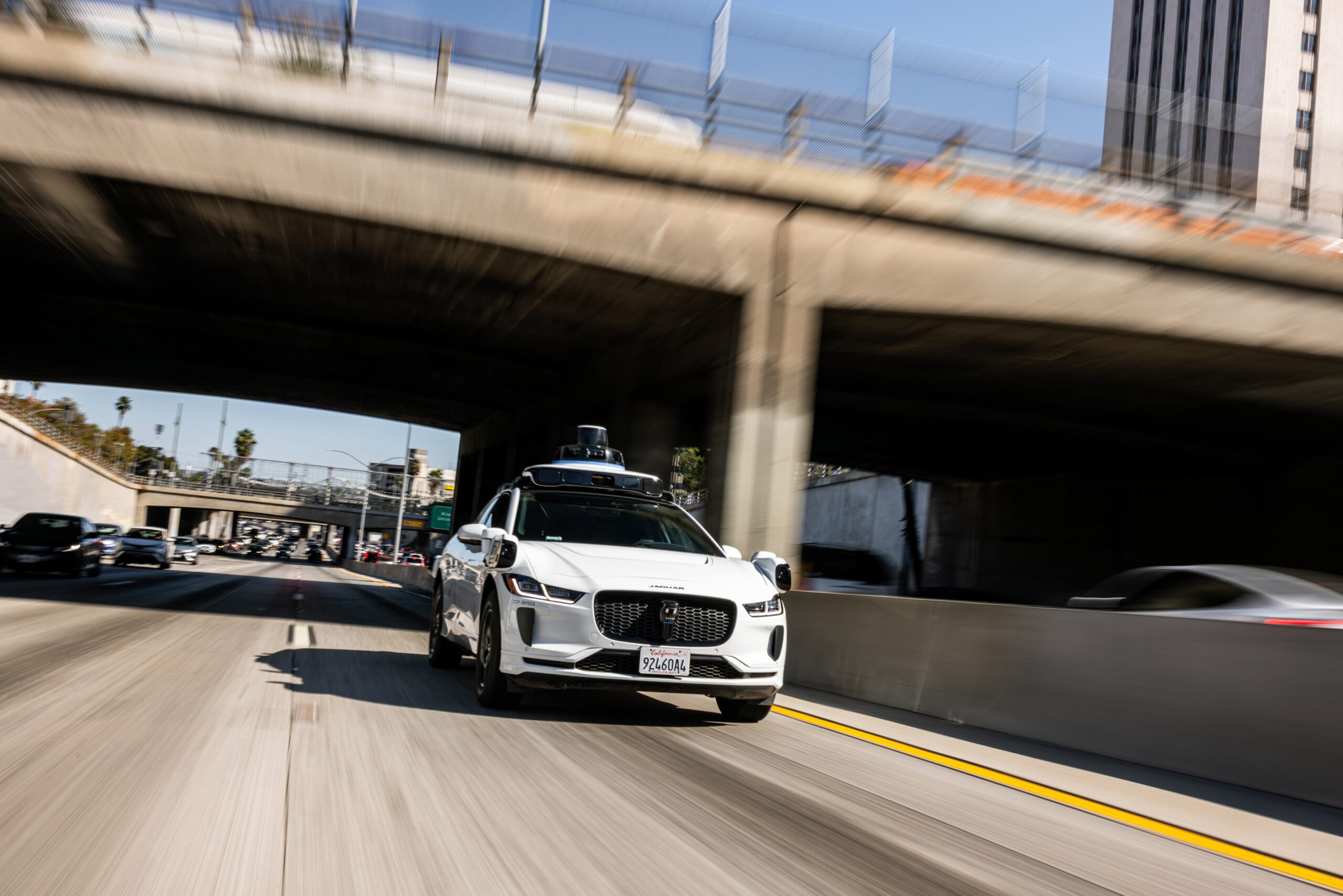
What happened: On November 6, a driverless Waymo on Interstate 280 attempted to overtake two California Highway Patrol cruisers during a traffic break — a moving violation that could get a human driver’s license suspended. It was the latest in a series of freeway incidents, and last week the California DMV banned Waymo’s vehicles from all state interstates. Construction zones have also posed a challenge for the company’s driverless system.
Why it matters for teams: Waymo mastered city streets, but freeways are proving to be a different problem — higher speeds, highway patrol interactions, and construction zones expose gaps that urban driving does not. For any team evaluating autonomous vehicles for logistics, delivery, or fleet use, the lesson is that a system’s safety record in one operating domain does not automatically transfer to another.
What to watch: How Waymo responds to the DMV ban and whether other states follow California’s lead. If your roadmap includes autonomous transport, treat highway operation as a separate, unproven capability until regulators say otherwise.
Based on reporting by The Verge.
X rolls out its first parental controls
What happened: X is rolling out parental controls that let parents and guardians manage teens’ accounts on the platform. Teens keep ownership of their accounts, while parents can see how much time their teen has spent on X, set daily limits, require approval for new followers, and limit For You recommendations to accounts the teen already follows. Parents cannot read private messages, see searches or viewing history, post as their teen, or access the account, and every change is recorded and visible to the teen.
Why it matters for teams: Platform governance is now a workplace-adjacent issue: employees’ families use these platforms, and social media policies increasingly have to account for how teens — including employees’ children — are exposed to them. X arriving late to parental controls, years after rivals, is also a useful reminder to check what controls actually exist on every platform your team relies on for communications or marketing, rather than assuming they are there.
What to watch: Whether the controls work as described in practice, and whether X’s rollout pressures other holdout platforms to add similar tools.
Based on reporting by The Verge.
WIRED tests 70 office chairs and names the 10 best for 2026
What happened: WIRED tested 70 office chairs and picked the 10 best for 2026, aimed at upgrading work-from-home setups with tested, comfortable seats.
Why it matters for teams: Hybrid and remote work made the home office a permanent part of the IT footprint. If your team has a home-office stipend or equipment budget, a tested shortlist beats a random Amazon search — and a good chair is one of the cheapest ways to cut the ergonomic complaints that land in IT’s inbox.
What to watch: Match the pick to the person: adjustability and fit matter more than brand. Use WIRED’s list as a starting point, not a purchase order.
Based on reporting by WIRED.
Bottom line
The through-line today is dependence: Nvidia’s credit story is about how much the AI boom depends on one CEO and one company’s guarantee; SpaceX’s orbital bet is about where AI compute will live next; and Waymo’s freeway ban is about how much autonomous driving still depends on the hardest edge cases. The practical moves are small and concrete — check the financing behind any neocloud capacity you buy, keep autonomous transport on a separate evaluation track from city driving, and confirm the parental controls on the platforms your team actually uses. The rest is worth watching, not acting on yet.