Daily tech roundup: AI is building itself faster, OpenAI hits $1.25 trillion, and the fridge-hacking wake-up call
Today’s news is dominated by AI’s own momentum: a new report says Anthropic’s models are improving about twice as fast as a year ago, partly because AI is now helping build AI, and OpenAI has reached a $1.25 trillion valuation as its rival prepares to go public. Around that, the politics are shifting — Big Tech is repositioning after the midterms, and Sequoia is winding down the scout program it pioneered. And on the practical side, hacked fridges are a reminder that connected devices are still a security problem, while WIRED and Mashable have fresh tested picks for the routers and iPhones teams actually buy.
At a glance
- AI is accelerating its own development — a METR report finds Anthropic’s models improving roughly twice as fast as a year ago, with AI helping build AI (The Verge).
- OpenAI valued at $1.25 trillion — a new round raised another $11 billion, while Anthropic has filed to go public (The Verge).
- Fridge hacks are an IoT wake-up call — escalating hacks hitting blood labs and grocery stores expose basic security lapses in connected devices (WIRED).
- Big Tech’s post-midterm pivot — after two years courting the White House, the industry is rebuilding ties with Democrats as AI oversight tightens (TechCrunch).
- Sequoia ends its Scouts program — the firm that pioneered the scout model 17 years ago is shutting it down in a broader overhaul (TechCrunch).
- Best Wi-Fi routers for 2026 — WIRED tested more than 50 routers; Wi-Fi 7 is now the sensible default, with a TP-Link ban still hanging over the budget pick (WIRED).
- Best iPhones for 2026 — Mashable’s testing puts the iPhone 17 first for most people, with the foldable iPhone Duo the most expensive iPhone ever (Mashable).
Anthropic’s AI is building AI — and researchers are alarmed
What happened: AI safety research organisation METR has published a report, following an 11-week investigation inside Anthropic, evaluating the company’s AI research and development. It found Anthropic is using AI to build more powerful AI, and it appears to be working: the company’s models are improving roughly twice as quickly as a year ago, with little indication of slowing down. Benchmark scores suggest Anthropic has made roughly two years of historical progress over the last year. The Verge describes this as some of the clearest evidence yet of AI accelerating its own development, raising questions about progress toward AI systems improving themselves with little or no human involvement. Anthropic was allowed to redact portions of the final report under its agreement with METR, and the article says it appears to have used that power liberally, raising questions about how much the public knows about the pace and risks of frontier AI development. The context is pointed: Anthropic is preparing to go public while its CEO, Dario Amodei, has publicly called for labs to slow down AI development.
Why it matters for teams: If AI capability is compounding faster than teams’ governance can keep up, the planning horizon for AI adoption, safety policy, and vendor risk shortens. This is not a distant research debate — it is the same technology teams are embedding in products, support, and internal tools right now, and the pace of change is the variable that breaks roadmaps. The redaction question matters too: teams evaluating frontier AI vendors should ask what independent evaluation actually covered, and what was withheld.
What to watch / do next: Watch whether other labs publish similar evaluations, and whether regulators or enterprise customers start demanding unredacted access to safety assessments as a condition of procurement. For teams, the practical step is to shorten AI policy review cycles and to treat “how fast will this capability change?” as a first-class question in any AI vendor evaluation.
Based on reporting by The Verge.
OpenAI is now worth $1.25 trillion — and Anthropic is heading for the stock market
What happened: OpenAI is now valued at $1.25 trillion in a new funding round that raised another $11 billion, according to Bloomberg — a figure that would make it one of the world’s most valuable companies. That follows a March raise of $122 billion from investors at a valuation of $852 billion. Bloomberg also reports OpenAI is still pursuing additional investments that could lift the round to $20 billion; it had initially hoped to raise as much as $30 billion at a $1.4 trillion valuation, before tech stocks dropped and midterm results showed public opinion turning against AI companies and data-centre projects. Meanwhile Anthropic filed its S-1 to go public last week. Earlier this year, OpenAI CEO Sam Altman said the company was holding off on its own IPO until it could make more confident claims about its models’ safety, with no specific timeline — though he also said it would be “kind of bad for the world if OpenAI waits too long to go public.” More recently, Altman has said OpenAI is prioritising safety instead of going “guns blazing” toward an IPO.
Why it matters for teams: The two leading AI labs are now on very different paths — one raising private money at a record valuation, the other heading for public markets — and both will face new scrutiny about safety, spending, and data-centre expansion. For teams buying AI, that means the vendors behind your tools are about to be judged by public investors as well as by customers, which tends to sharpen both product pressure and transparency demands. The funding also signals the buildout is not slowing: more capital means more compute, more data centres, and more pressure on the energy and siting questions communities are already raising.
What to watch / do next: Watch Anthropic’s IPO process for what it discloses about revenue, safety spending, and risk — public filings will tell teams more about their vendors than any marketing page. And if your organisation hosts or depends on AI data-centre capacity, expect the siting and electricity debate to intensify as valuations and public attention climb.
Based on reporting by The Verge.
Hacked fridges are an Internet-of-Things wake-up call
What happened: Escalating hacks affecting blood labs and grocery stores show the very real risks to critical infrastructure that come from basic security lapses involving internet-connected devices. That is the warning in WIRED’s Kernel Panic column: refrigeration systems — the kind that keep blood supplies and groceries cold — are being hit, and the failures trace back to elementary security gaps in connected equipment rather than exotic attacks. (The full column is subscriber-only, so this summary is based on WIRED’s published headline and deck.)
Why it matters for teams: IoT is no longer a side issue for IT and security teams. Connected refrigeration, HVAC, cameras, and sensors now sit on the same networks as business systems, and a basic lapse in a device nobody thinks of as a computer can become a critical-infrastructure incident. If your organisation runs facilities, labs, clinics, or retail sites, the attack surface includes every connected appliance, not just laptops and servers.
What to watch / do next: Audit what is actually connected to your network — especially building systems and specialist equipment that IT did not buy. Segment IoT devices off the main network, change default credentials, and check whether vendors still ship security updates for the devices you already own. The fix here is unglamorous, which is exactly why it keeps getting missed.
Based on reporting by WIRED.
After the midterms, Big Tech is trying to make new friends in Washington
What happened: After two years building closer ties with President Donald Trump and his administration — attending White House events, scaling back diversity, equity and inclusion programs, and donating millions to super PACs — many of Silicon Valley’s biggest names are now working to rebuild ties with Democrats, who have pledged to tighten oversight of AI. The shift follows the midterm elections: OpenAI hired Jessica Schumer, daughter of Democratic Senator Chuck Schumer, just before the vote, and said it would start calling its data centres “compute campuses.” The administration’s policies had benefited the industry, including tax breaks, the pausing of some federal investigations, and looser AI regulation. But the next two years could bring data-centre moratoriums, a wave of AI regulation bills, and more action at the state level than in Washington. The day after the midterms, a trillion-dollar market sell-off spooked investors, with some reportedly reconsidering Anthropic’s reported trillion-dollar IPO. Meta president Dina Powell McCormick said at WSJ Tech that companies have to work with “the government that the American people elect” and be bipartisan. Critics are sceptical: Public Citizen’s J.B. Branch called moves like the Schumer hire “PR washing,” while Data & Society’s Alice Marwick said it may be “a little too late” and that tech companies should focus on how their products improve people’s lives.
Why it matters for teams: The rules your company operates under may soon depend more on where you operate than on anything Washington passes. States have already sued tech companies and passed their own AI laws, including measures on chatbots and deepfakes, and a federal AI Litigation Task Force created last December is challenging state AI laws. For teams, that means AI compliance is becoming a patchwork: data-centre siting, electricity costs, and AI rules will vary by state and community, and the political mood around AI is turning — midterm results showed voters want stronger guardrails, and public opinion is turning against AI companies and data-centre projects.
What to watch / do next: Track state-level AI regulation where you operate, not just federal headlines, and factor data-centre siting and energy costs into AI infrastructure planning. If your team deploys AI products, expect more scrutiny of safety, transparency, and community impact — and plan for the possibility that the rules change mid-project.
Based on reporting by TechCrunch.
Sequoia is shutting down the scout program it pioneered
What happened: Sequoia announced a broad overhaul this week in a memo posted to X, including closing its London office and shutting down its scout program. Sequoia pioneered the scouts model 17 years ago, in which select founders and operators write checks on the firm’s behalf, and many VC firms followed suit amid competition for deal flow. But a consensus now seems to be forming that the model has reached its limits in its current form. Not everyone was sold on it in the first place: VC Sheel Mohnot wrote on X that the scouts “don’t really care that much about the investments” and that “you can still miss (like they did with Uber),” adding “I suspect other firms will shutter theirs too.” Sequoia framed the move as part of a broader need for more focus — “putting more energy behind fewer people and things.” Rival Andreessen Horowitz has already revamped its own program to double down “on the best people,” giving scouts more resources but expecting more activity, such as co-hosting dinners. Two forces are pushing the change: seasoned operators may get more financial upside as angels investing their own money, and leading VC firms are now big and well-known enough that the best founders tend to come to them. Former Sequoia scout Roxanne Varza, boss of Station F, said she was “sad” to hear the program was ending and hoped other funds would not follow suit, noting scout programs helped many aspiring investors build track records and helped mature Europe’s early-stage investment landscape.
Why it matters for teams: For founders and startup teams, this is a signal about how the funding landscape is consolidating: the biggest firms are concentrating on fewer, larger bets and pulling back from the distributed scouting that once gave early-stage founders more doors to knock on. If you are raising, the practical effect is fewer warm introductions through scouts and more reliance on direct relationships with partners — and on standing out in a market where the best-known firms expect founders to come to them.
What to watch / do next: Watch whether other firms follow Sequoia and shutter or revamp their scout programs. If you are a founder, do not assume the scout route still exists at the firms you are targeting — check, and build direct partner relationships instead. If you are an operator who was a scout, the angel route may now be the better-paying path.
Based on reporting by TechCrunch.
WIRED tested 50+ routers — here are the picks that matter
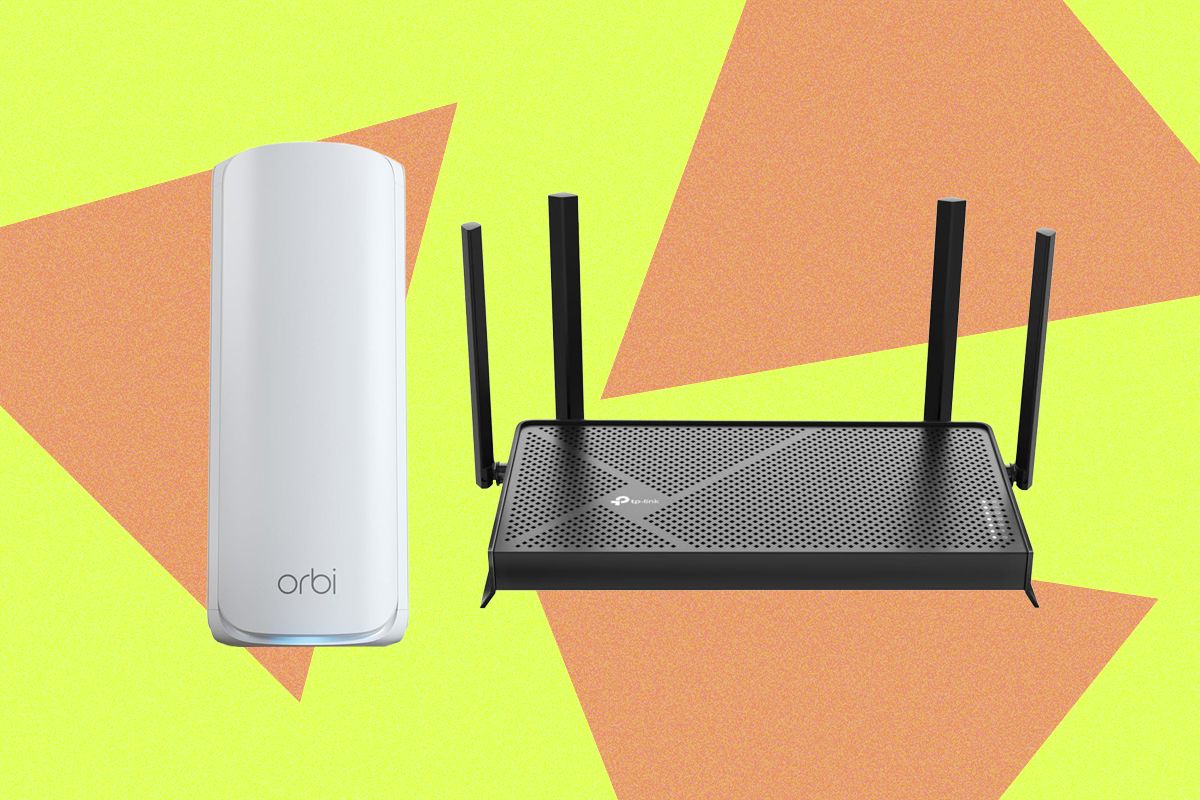
What happened: WIRED has updated its guide to the best Wi-Fi routers after testing more than 50 of them. The top pick for most people is the Asus RT-BE58U, a Wi-Fi 7 router with an MSRP of $145, praised for excellent dual-band performance and subscription-free security and parental controls, though it has no 6-GHz band. The budget pick is the TP-Link Archer BE230 (MSRP $120, listed at $80), but the article notes the US government has been mulling a TP-Link router ban, with the Commerce, Defense, and Justice departments investigating the company. The midrange pick is the Netgear Nighthawk RS300 ($300), and the mesh pick for large homes is the Netgear Orbi 770 Series ($550 for a two-pack, $700 for three). There is also a travel router, the Asus RT-BE58 Go ($160), a 5G mobile hotspot, the Netgear Nighthawk M7 ($500, data plan required), and a $900 Wi-Fi 8 router, the Asus ROG Rapture GT-BN98 Pro — though WIRED notes final Wi-Fi 8 certification is still about a year away and most people should not worry about it yet. One regulatory note: the FCC’s foreign-made router ban announced in March may stop companies without a Conditional Approval from the Department of Defense and Department of Homeland Security, though the FCC extended a waiver for software and firmware updates “at least until January 1, 2029.”
Why it matters for teams: Office and hybrid-work networks live or die on the router, and Wi-Fi 7 is now the sensible default for a refresh — faster, better at handling many devices, and increasingly affordable. The TP-Link situation is the real story for IT buyers: a budget pick from a vendor under federal investigation is a procurement risk, not just a price question. And the FCC angle matters for any organisation buying network gear at scale: check that your vendor has the approvals to keep shipping firmware updates.
What to watch / do next: If you are refreshing office or remote-work kit, standardise on Wi-Fi 7 and check the vendor’s regulatory standing before buying in bulk. Mesh is worth the money for larger spaces, and do not pay the Wi-Fi 8 premium yet — the standard is not final. Prices are as reported and may change.
Based on reporting by WIRED.
Mashable’s best iPhones for 2026 — the iPhone 17 wins for most people
What happened: Mashable has published its tested guide to the best iPhones for 2026. In mid-September Apple launched the iPhone 18 Pro and Pro Max, with upgraded cameras, revamped vapour chamber cooling, and longer battery life, alongside the long-awaited iPhone Duo, its first foldable. The 2026 roster runs on iOS 27 and also includes the iPhone 17, the budget iPhone 17e, and the iPhone Air. Mashable notes every current iPhone has gotten more expensive because of the ongoing global memory crisis, and the Duo is still the most expensive iPhone ever, even if it was slightly less of a splurge than predicted. The top pick for most people is the iPhone 17 (256GB), with up to 30 hours of video playback, an Apple A19 chip, and 48MP wide and ultrawide cameras — described as fast-enough, long-lasting-enough, and “Pro”-feeling, with the 18 Pros and Duo overkill for the average user. The budget pick is the iPhone 17e (256GB), Apple’s first budget phone with MagSafe support, with up to 26 hours of video playback. For photography, the iPhone 18 Pro (256GB) adds a 48MP 4x telephoto camera and a physical variable aperture on the main lens, with up to 36 hours of video playback. The battery-life winner is the iPhone 18 Pro Max, with up to 45 hours of video playback — the longest-rated iPhone battery in the guide. The iPhone Duo is the best foldable, with a 7.6-inch inner display and a 5.4-inch outer display, but it has only Touch ID, no Face ID, and first-generation quirks. The iPhone Air is the thinnest handset Apple has ever made. Apple has not announced the standard iPhone 18 yet — just its Pro counterparts — and it probably will not launch until next March, alongside the iPhone 18e.
Why it matters for teams: For IT teams managing mobile fleets, the takeaway is reassuring: the mid-range iPhone 17 is the sensible standard issue, and the expensive Pro and foldable models are overkill for most staff. The memory crisis is pushing prices up across the whole range, so budget for higher per-device costs in the next refresh cycle — and note the standard iPhone 18 is not coming until March, so there is no reason to wait for it if you need devices now.
What to watch / do next: If a fleet refresh is due, standardise on the iPhone 17 and skip the Duo for now — first-generation foldables and Touch ID-only authentication are not what you want to support at scale. Watch memory prices: if the global memory crisis eases, the next round of pricing may look very different. Prices and specifications are as reported and may change.
Based on reporting by Mashable.
Bottom line
The through-line today is acceleration meeting accountability: AI is improving faster because AI is helping build it, the labs behind it are now worth trillions or heading for public markets, and the politics around them are turning. The practical moves for teams are to shorten AI policy review cycles, track state-level AI rules where you operate, and audit the connected devices on your network — the fridge story is the cheapest lesson in the roundup. The buying guides are the easy part: Wi-Fi 7 for the office, the iPhone 17 for the fleet, and no reason to pay the Wi-Fi 8 or foldable premium yet.