Politics collided with infrastructure this week, and the aftershocks reach straight into IT planning. Voters pushed back on data centers in the midterms, a U.S. intelligence memo reportedly ties a tech executive to spying on Nvidia’s CEO, and the media industry is still chasing video’s promise a decade after its first pivot. Here’s what matters for your team.
At a glance
- Midterms put data centers on notice — Voters rejected data-center projects and elected candidates promising to restrict them. (TechCrunch)
- Nvidia CEO was reportedly a spying target — A U.S. intelligence memo reportedly claims a Megaspeed executive was recruited to spy on Jensen Huang. (TechCrunch)
- WIRED’s best computer speakers of 2026 — After testing 30 pairs, WIRED names its top picks for the desk. (WIRED)
- Media’s pivot to video, version 2.0 — A decade after the first video gold rush, publishers are doubling down again. (The Verge)
Midterms put data centers on notice
What happened: Democrats won a historic victory in this week’s midterm elections, and the results carried a clear message for the tech industry. In dozens of local ballot measures, voters rejected data centers — measures that would have imposed restrictions or moratoriums on data-center construction largely passed. Voters also elected politicians who campaigned on restricting data centers, including Texas governor-elect Gina Hinojosa, who made it a campaign promise. On TechCrunch’s Equity podcast, the hosts noted that Elon Musk, one of the biggest data-center builders and the largest donor to the Republican Party, appears to have gotten little for donating roughly half a billion dollars, while his companies are now headquartered in a state that has turned sharply Democratic. The hosts also pointed to a shift on Wall Street, where investors are growing less enthusiastic about hyperscalers spending heavily on new data centers and compute.
Why it matters for teams: Data-center capacity is the foundation of the AI services your team buys, and the politics around building it just got harder. Expect longer approval timelines, more local opposition, and more scrutiny of power and water use — which can translate into slower rollouts and higher costs for cloud and AI capacity. OpenAI has already responded by publishing a “compute campus policy blueprint” that drops NDAs and promises more transparency about its plans, a sign that hyperscalers are feeling the pressure.
What to watch: Whether other hyperscalers follow OpenAI’s transparency playbook, and whether the political headwinds slow the pace of new capacity in your region. If your roadmap depends on a specific provider’s new region or capacity, ask your account team how local approvals are tracking.
Based on reporting by TechCrunch.
Nvidia CEO was reportedly a spying target
What happened: A memo circulated earlier this year claimed that technology executive Alice Huang was recruited by China’s Ministry of State Security to spy on Nvidia CEO Jensen Huang, according to multiple media reports. The New York Times was first to report on the memo, which was reportedly based on U.S. intelligence, and the Financial Times subsequently reported that the memo also claimed Jensen Huang had a romantic relationship with Alice Huang, an executive at Singapore-based Megaspeed. An Nvidia spokesperson told the Times that Jensen Huang’s interactions with Alice Huang were “not unusual,” and that the company does not share classified information with its customers. A separate Times report examined New Matrix, a Chinese company authorized by the U.S. Commerce Department to buy advanced Nvidia chips — but at the office address listed by New Matrix, reporters found only “a hollow gray shell,” raising concerns that it could be a front for a blacklisted private equity firm.
Why it matters for teams: Nvidia’s chips sit at the center of nearly every AI strategy, and the episode is a reminder that the chip supply chain is now a geopolitical flashpoint. Export controls, authorized buyers, and front-company concerns are not abstract policy — they shape which hardware your vendors can get, how fast, and at what price. It is also a sharp reminder about executive targeting: senior leaders at firms with sensitive technology are intelligence targets, and that risk extends to the people and partners around them.
What to watch: Further reporting on the memo and on New Matrix, plus any U.S. Commerce Department action on chip authorizations. If your AI plans depend on Nvidia hardware, keep an eye on supply and lead times, and review how your own executives handle contact with unfamiliar intermediaries in the hardware supply chain.
Based on reporting by TechCrunch.
WIRED’s best computer speakers of 2026
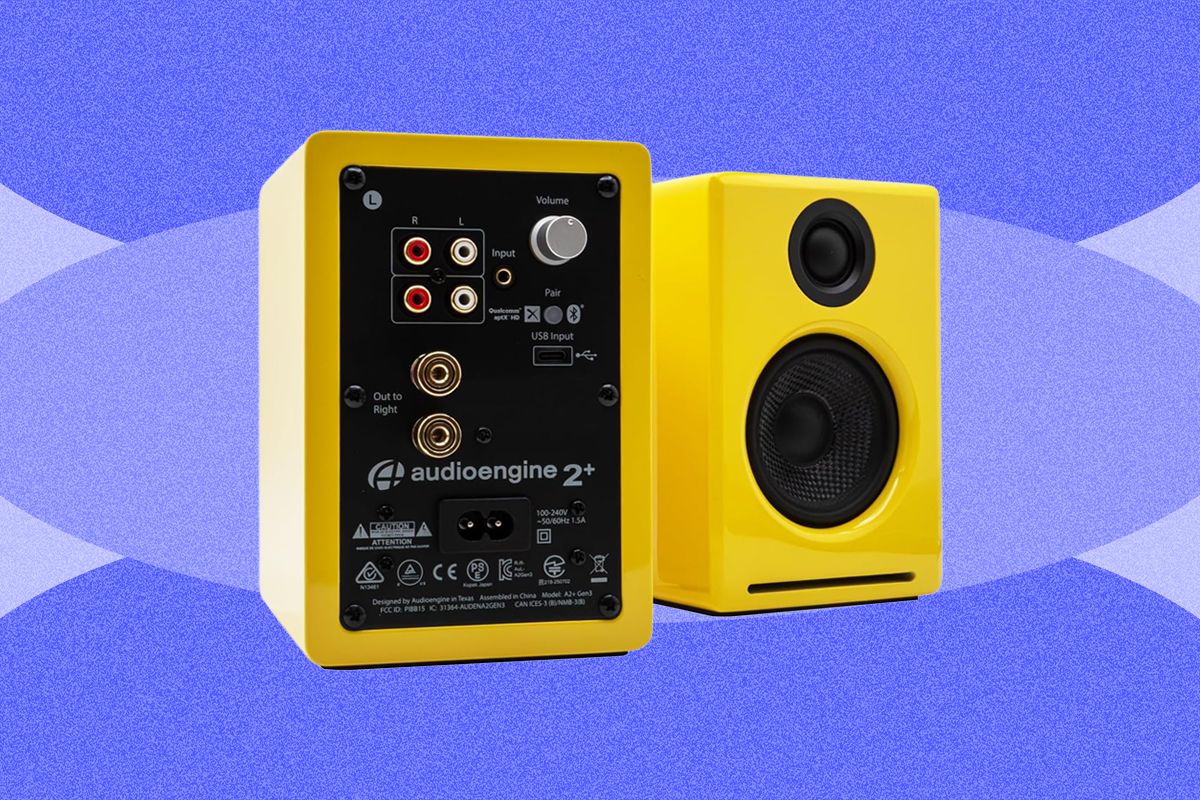
What happened: WIRED tested more than 30 pairs of computer speakers and soundbars over several years — each for at least a week, across video calls, music, podcasts, movies, and games — and published its 2026 list of the eight best, with prices from $35 to $700. The top pick overall is the Audioengine A2+ at $299, a 60W pair with Bluetooth 5.3, USB-C, and a built-in DAC added in a 2025 update. Budget standouts include the Creative Pebble V3 at $43 and the Edifier G2000 at around $80 to $110, while the Creative XF1 at $150 is the pick under $200. At the high end, the SteelSeries Arena 9, a 5.1 surround system, runs $680. Prices are as WIRED reported them and may change.
Why it matters for teams: Audio is easy to overlook in a workstation setup, but it shapes video calls, focus work, and the hybrid meeting rooms many teams now run from desks rather than conference rooms. A tested shortlist beats guessing from spec sheets — and the range here means there is a sensible option at nearly every budget, from a $43 pair for a hot desk to a full surround setup for a dedicated space.
What to watch: Match the pick to the use case and check connectivity (USB, Bluetooth, aux) against the laptops and docks your team actually uses. WIRED’s buying advice: angle speakers about 15 degrees up toward your ears, prefer USB where possible since the speakers’ DAC handles the digital signal, and check dimensions and included cables before ordering.
Based on reporting by WIRED.
Media’s pivot to video, version 2.0
What happened: Almost exactly a decade ago, in the mid-2010s, the media industry poured money into social video, chasing bigger audiences and new revenue. Publications hired video teams and handed platforms like Facebook control of reach and distribution — then it emerged that Facebook had inflated video view counts, and the pivot collapsed. Newsrooms that had cut writers and editors to go all-in on video then cut those video teams too, leaving social video associated with layoffs and instability. Now the cycle is repeating in a new form: social media companies have reorganized their feeds around video, spurred by TikTok’s massive growth during the pandemic, while the media industry is still playing catch-up — in some cases slow to jump in, cautious given past experience. As The Verge’s Mia Sato puts it, publishers are only now starting to crack the vertical video code, just as the platforms are looking ahead to yet another new format.
Why it matters for teams: If your team produces content — product videos, explainers, social clips, internal comms — the format your audience expects keeps shifting toward short-form video, and the platforms keep rewarding it. The lesson of the first pivot is that chasing a format on a platform’s promise, without a real audience strategy, burns budget and jobs; the lesson of the second is that ignoring video is not an option either.
What to watch: Where your own audience actually watches, and whether your video effort has a distribution plan beyond “post it and hope.” Treat video as a channel with its own metrics, not as a repackaging of whatever you already wrote — and be wary of building your whole strategy on one platform’s numbers.
Based on reporting by The Verge.
The bottom line
The through-line today is that the infrastructure behind AI — the data centers, the chips, and the politics around both — is getting harder to build and harder to ignore. If your plans assume cheap, fast, frictionless capacity, build in more slack. And on the smaller stuff, the WIRED speaker list is a useful shortcut the next time a desk setup needs an upgrade. What remains uncertain is how much the midterm results will actually slow data-center construction versus how much is posturing — watch what hyperscalers do with their build plans over the next few months, not just what they say.